 With the HUG shop working on a “pocket window” that will have an automated system similar to the design Anderson is working on, a possible future collaboration is in the works.
Friday, April 15, 2011
Polyester can do what?
On Thursday, Hug hosted regional builder Dan Anderson for a campus tour and meet & greet. Mr. Anderson was asked to visit the campus because of his work on a multi-layered window that would allow higher energy and heat retention. The basic design is to place several layers of a polyethylene terephthalate (PET) film that would automatically raise or lower inside the window pane. This would effectively allow sunshine in while retaining heat during cloud cover or at night.
With the HUG shop working on a “pocket window” that will have an automated system similar to the design Anderson is working on, a possible future collaboration is in the works.
With the HUG shop working on a “pocket window” that will have an automated system similar to the design Anderson is working on, a possible future collaboration is in the works.

Tuesday, April 5, 2011
Our Little Ladies Rebellion
For the past several weeks, our little ladies have begun to explore around their coop. This wasn't too much of a problem since snow was covering the ground, they would roost back inside their coop at night, and they wouldn't do too much damage to the neighboring plants.


However, now that garlic and rhubarb have been planted in the area, having our little ladies scratch up any insulation or seedlings was not allowed. Hay was used as an insulation to
prevent frost from creeping down to the seedlings.

Here we can see the damage the hungry ladies were causing.
Therefore we did our best to round up the rebels, gave them a little clipping, and set them back into the coop (which was a small ordeal with the raspberry bushes prickly, red and bare!)
Who knew that catching chickens was a two person activity?
Thursday, March 10, 2011
Go Green This St. Patricks Day
This St. Patrick's Day, the "wearing of the green" takes on more significance than ever. The Earth's climate is changing. Resources are under pressure — petroleum, in particular — but also basics like clean water. Enormous disparities in food, medical care and housing exist between East and West; between the Northern Hemisphere, and the South.
Admittedly, St. Patrick's Day isn't the most elevated of occasions. It's a tip of the hat to Ireland and its national patron — and an opportunity for everyone, Irish or not, to have a bit of fun. That's the spirit in which we present this list of ways to "green" your St. Patrick's Day.
So settle in for a bit of Earth-friendly blarney, and let's green our St. Patrick's Day festivities.
1) Buy organic beer.

Admittedly, St. Patrick's Day isn't the most elevated of occasions. It's a tip of the hat to Ireland and its national patron — and an opportunity for everyone, Irish or not, to have a bit of fun. That's the spirit in which we present this list of ways to "green" your St. Patrick's Day.
So settle in for a bit of Earth-friendly blarney, and let's green our St. Patrick's Day festivities.
1) Buy organic beer.
What's St. Patrick's Day without a mug or two of beer? Beer is one of humankind's most ancient inventions, probablydiscovered when soaked grains fermented in the presence of airborne yeast spores. The process has certainly become more sophisticated over the centuries, giving rise to any number of beer tastes and styles. But it's all basically the same stuff: water plus grain plus yeast equals a fun night at the local pub with your mates.
Good luck separating an Irishman from his Guinness. Its rich, chocolatey body is ubiquitous in all corners of Irish society (and much of the United Kingdom, for that matter). Quite a few pints will be hoisted thisweek in honor of St. Patrick, the Apostle of Ireland.
Consumer interest in organic foods has certainly caught the eye of most beer manufacturers, which are now producing a broad assortment of brews produced with ingredients that meet organic production standards. Even giants like Anheuser-Busch have gotten into the act.
But one company bucking the trend is Guinness. Given its domination of the Irish market, if you're looking for an organic St. Patrick's libation, you'll have to look elsewhere.
An obvious choice for fans of traditional stouts would be Whole Foods' Old Plowshare Stout. It's brewed by California's North Coast Brewing Company, a pioneer in organic beers. There's also Peak Organic Beers in a variety of styles ranging from pale to amber ales. The good news is that your local healthfood store or well-supplied beer seller is likely to have an organic brew to meet your tastes. Just be sure someone is functioning as the Designated Leprechaun before getting behind the wheel.
 2) Wear the green (organics) proudly.
It's a great time to be an eco-friendly consumer. Not only are organic foods finally filtering their way down to your local big-box grocery, it's easier than ever before to find quality organic clothing.
Growing cotton takes a tremendous toll on the earth in terms of water use and the sheer tonnage of pesticides used to keep conventional fields healthy. But that's not the only way to farm cotton, one of humankind's best-loved and versatile fibers. Sustainable cotton production addresses these concerns, seeking reasonable yields which are better for the land and the people who work it.
Wear the green all year long. Most major clothing companies — even Levi's — now carry an organic line or two. Looking for something organic with an Irish touch? Try this shamrock beauty from OfflineTshirts.com. It'll bring good luck to you and the Earth.
3) Go veggie with your Irish cooking.
There's little debate over the impact of livestock farming on the environment. The average cattle ranch can produce as much sewage runoff as a small city. It takes about 16 pounds of grain or soy feed to produce a single pound of beef, and irrigation associated with livestock production accounts for around half of all the consumed water in the United States. The story is similar for the farming of chickens, pigs and other animals that find their way into the human food chain.
So cutting back on meat consumption is an earth-friendly choice. And there's no reason to let traditionally meat-heavy Irish cooking get your way.
Try your hand at producing a veggie version of an old classic, Beef and Guinness Stew. You'll find an easy recipe at About.com which substitutes seitan — a wheat gluten food — for the dish's conventional ingredients. TheFoody.com has a delicious (and meat-free) version of Irish Vegetable Stew and there are all manner of veggie "bangers" available at your local health or whole foods store just waiting to be fried.
Wash it all down with one of those organic beers. Irish eyes are smiling.
4) Plant something green.
Seems obvious, doesn't it? If you're green at heart, put some green in your garden. Or you can pay to have something planted where it will do the most good.
 If you're concerned about your carbon footprint — the amount of carbon dioxide generated annually as the result of your person consumption — become a modern Johnny Appleseed and put down some trees. As little as $90 is enough to plant 900 trees, more than enough to cover your annual generation of carbon dioxide.
For a St. Patrick's Day twist, scatter some organic clover seed in your garden. It's attractive, bee-friendly, and helps hold moisture into the soil.
5) Do some good for Ireland.
If you're thankful for your Irish heritage or just want to sew a little good karma in the Emerald Isle, find an Irish charity and lend them a hand. Most of the major international groups have an Irish presence. Habitat for Humanity is one example. You can also find a list of regional organizations at IndexIreland.com.
Good luck separating an Irishman from his Guinness. Its rich, chocolatey body is ubiquitous in all corners of Irish society (and much of the United Kingdom, for that matter). Quite a few pints will be hoisted thisweek in honor of St. Patrick, the Apostle of Ireland.
Consumer interest in organic foods has certainly caught the eye of most beer manufacturers, which are now producing a broad assortment of brews produced with ingredients that meet organic production standards. Even giants like Anheuser-Busch have gotten into the act.
But one company bucking the trend is Guinness. Given its domination of the Irish market, if you're looking for an organic St. Patrick's libation, you'll have to look elsewhere.
An obvious choice for fans of traditional stouts would be Whole Foods' Old Plowshare Stout. It's brewed by California's North Coast Brewing Company, a pioneer in organic beers. There's also Peak Organic Beers in a variety of styles ranging from pale to amber ales. The good news is that your local healthfood store or well-supplied beer seller is likely to have an organic brew to meet your tastes. Just be sure someone is functioning as the Designated Leprechaun before getting behind the wheel.
2) Wear the green (organics) proudly.
It's a great time to be an eco-friendly consumer. Not only are organic foods finally filtering their way down to your local big-box grocery, it's easier than ever before to find quality organic clothing.
Growing cotton takes a tremendous toll on the earth in terms of water use and the sheer tonnage of pesticides used to keep conventional fields healthy. But that's not the only way to farm cotton, one of humankind's best-loved and versatile fibers. Sustainable cotton production addresses these concerns, seeking reasonable yields which are better for the land and the people who work it.
Wear the green all year long. Most major clothing companies — even Levi's — now carry an organic line or two. Looking for something organic with an Irish touch? Try this shamrock beauty from OfflineTshirts.com. It'll bring good luck to you and the Earth.
3) Go veggie with your Irish cooking.
There's little debate over the impact of livestock farming on the environment. The average cattle ranch can produce as much sewage runoff as a small city. It takes about 16 pounds of grain or soy feed to produce a single pound of beef, and irrigation associated with livestock
production accounts for around half of all the consumed water in the United States. The story is similar for the farming of chickens, pigs and other animals that find their way into the human food chain.
So cutting back on meat consumption is an earth-friendly choice. And there's no reason to let traditionally meat-heavy Irish cooking get your way.
Try your hand at producing a veggie version of an old classic, Beef and Guinness Stew. You'll find an easy recipe at About.com which substitutes seitan — a wheat gluten food — for the dish's conventional ingredients. TheFoody.com has a delicious (and meat-free) version of Irish Vegetable Stew and there are all manner of veggie "bangers" available at your local health or whole foods store just waiting to be fried.
Wash it all down with one of those organic beers. Irish eyes are smiling.
4) Plant something green.
Seems obvious, doesn't it? If you're green at heart, put some green in your garden. Or you can pay to have something planted where it will do the most good.
If you're concerned about your carbon footprint — the amount of carbon dioxide generated annually as the result of your person consumption — become a modern Johnny Appleseed and put down some trees. As little as $90 is enough to plant 900 trees, more than enough to cover your annual generation of carbon dioxide.
For a St. Patrick's Day twist, scatter some organic clover seed in your garden. It's attractive, bee-friendly, and helps hold moisture into the soil.
5) Do some good for Ireland.
If you're thankful for your Irish heritage or just want to sew a little good karma in the Emerald Isle, find an Irish charity and lend them a hand. Most of the major international groups have an Irish presence. Habitat for Humanity is one example. You can also find a list of regional organizations at IndexIreland.com.
Monday, March 7, 2011
Let worms do the dirty work!

One way to make home gardening easier is to make your own compost. Normally, a good compost will take 3-12 months before it is able to be collected and implemented in your planting. If you want a quicker way, though, simply add worms. This method is called Vermicomposting.
Worms can survive only in a small range of temperature (40-80 degrees), so an indoor environment is preferable. With little odor, this will allow city dwellers, apartment owners, and even dorm roomers to be able to create their own compost bin.

But, you can't just feed them anything. We give them a healthy diet of:
1) fruit and veggies (rinds and peelings)
2) small pieces of meat
3) egg shells (crushed)
4) coffee grounds and tea bags
What we try to keep out of our bins are:
1) egg cartons
2) white floured items (white breads, cookies, etc.)
3) salty items (sauerkraut, pickles, etc.)
While our worms LOVE this stuff, these compostable items are not exactly what they eat. They eat the bacteria these items create when they decompose. And when the worms are done with it, they leave a fertilizer that is twice as effective than chemical fertilizers.
While our worms LOVE this stuff, these compostable items are not exactly what they eat. They eat the bacteria these items create when they decompose. And when the worms are done with it, they leave a fertilizer that is twice as effective than chemical fertilizers.
Here are several more websites that show you different ways to begin vermicomposting. Pick and choose your favorite method.
The planting season is almost on us. Make your garden grow healthier.
Thursday, March 3, 2011
Eggcellent

Look at the size of the eggs our chickens lay.
With an ordinary store-bought egg at its side for comparison, it's easy to see why the chickens are such a hit here.
Wednesday, February 23, 2011
Good Local Eatin'
One of HUG's core missions is to "Shorten the Loop." Which, among other things, boils down to "keep your food local."
While this is an admirable goal, the most basic reason to keep your food local is simply taste! The freshest and most tasty food you will eat will be the food that is grown closest to your own home. Therefore, we decided to put our money where our mouths were, so to speak.
We raised 20 chickens over the winter. With proper care and handling they have thrived, even in the cold winter. During the winter, the egg production diminished. However, once more sunlight became present, we started to experience up to a dozen eggs a day.
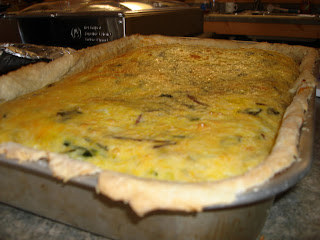
They make the best quiche!
While these hens are aged beyond the 6-8 weeks looked at for the best tasting meat, they can still be used for soups and broths.
While these hens are aged beyond the 6-8 weeks looked at for the best tasting meat, they can still be used for soups and broths.
Moreover, not only do chickens produce food for us, but their manure makes the best fertilizer. We're planning on using their manure to fertilize our gardens this spring, which in turn will help us make the freshest and most tasty vegetables. Why? Because they come from our own backyard!
What else do you think you can do to keep your food local?
What else do you think you can do to keep your food local?
Tuesday, December 21, 2010
Quilt

In years past HUG employees have contributed to other non-profit organizations on behalf of Paul & Lynn during the holiday season. This year we took a slightly different approach.
Employees, past and present, were asked to donate their company logo'd apparel. Representing the Hunt's businesses (old and new), the donated items were converted into a very large, very cozy, memory quilt.
Subscribe to:
Posts (Atom)